Granite or Quartz Countertop in Riverside: Which Holds Up Better?
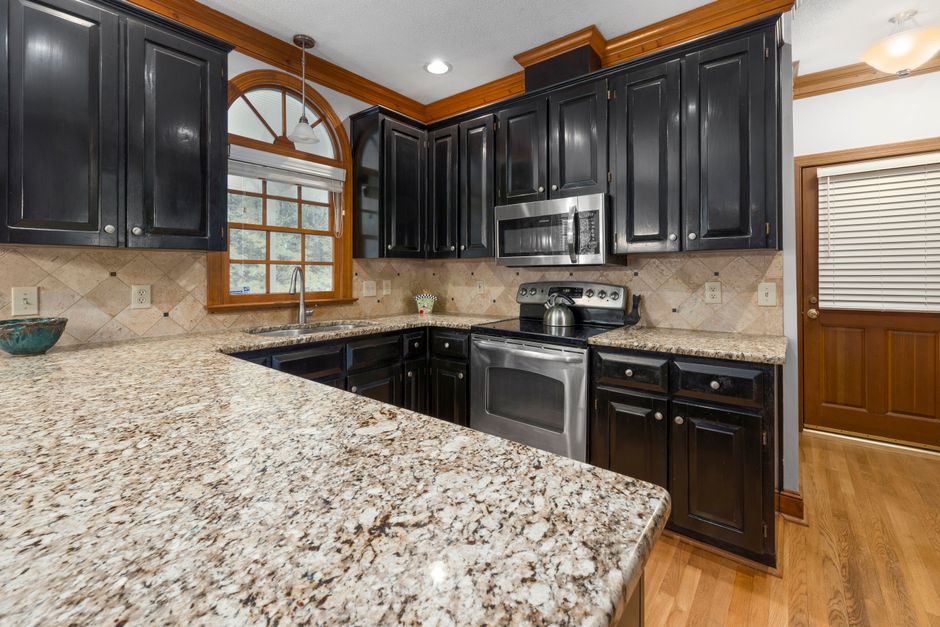
Granite holds up better against heat and sun, while quartz holds up better against everyday spills and the need for upkeep. In a busy Riverside kitchen, that trade decides most of the question. The rest comes down to how the kitchen is used, where the light falls, and how well the slab is installed.
Why the two materials behave differently
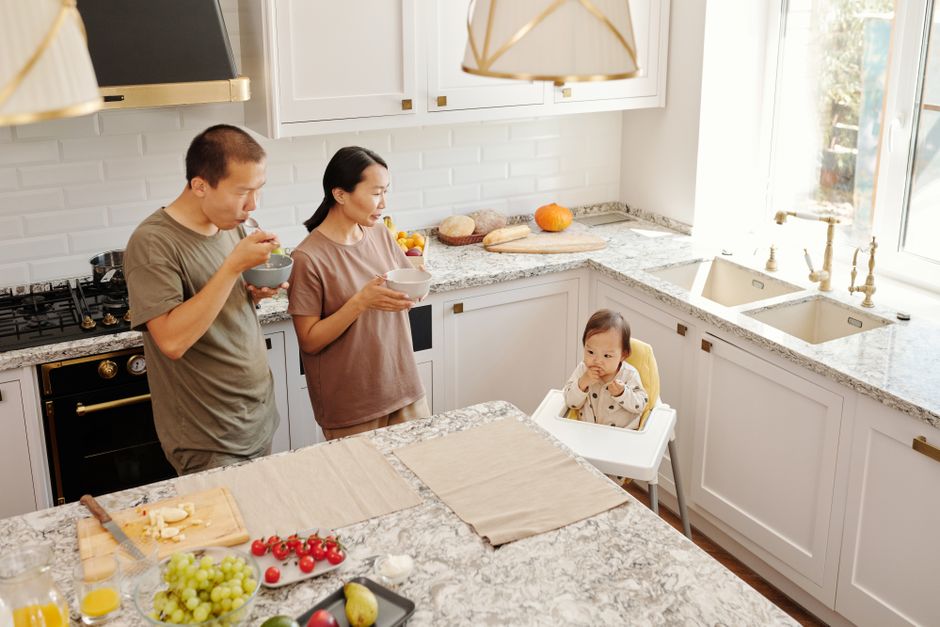
Granite is natural stone cut from a quarry block. Quartz is an engineered slab made of crushed quartz bound together with polymer resin. Nearly every durability difference between them traces back to that resin.
The resin makes quartz nonporous, so liquids cannot soak in. It is also the part that reacts to heat and ultraviolet light. Granite has no resin to scorch, but it is porous to some degree, and that varies from slab to slab.
Heat: a hot pan is where quartz loses
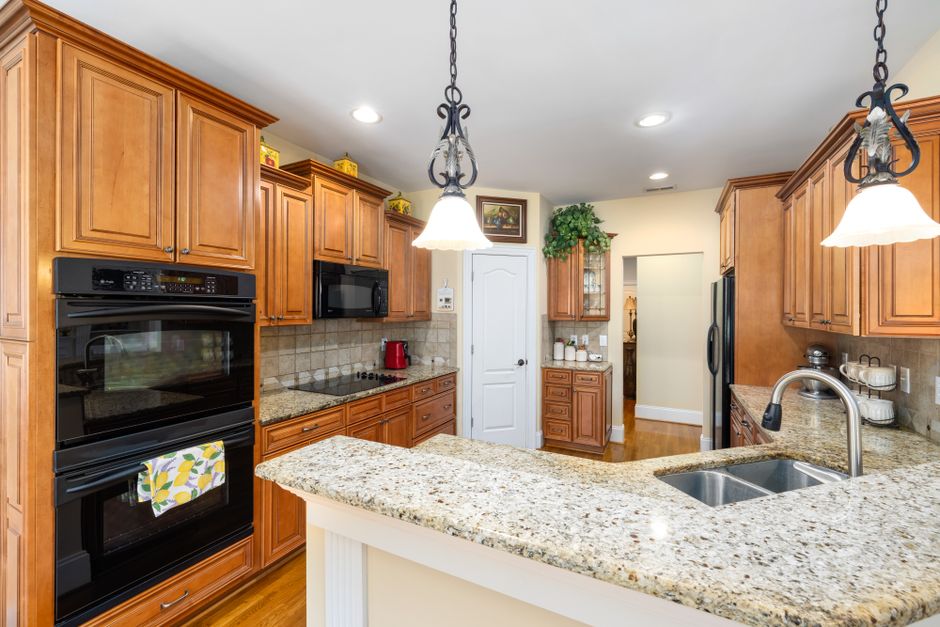
A hot pan, a sheet tray straight from the oven, or a slow cooker or electric griddle left running can scorch or discolor the resin in quartz. That damage cannot be polished out. Quartz is not heatproof, and trivets belong under hot cookware every time.
Granite tolerates hot cookware much better. It is not immune to thermal shock, though. A very hot pot set down on a cold spot, especially near a sink or cooktop cutout, can start a crack. Trivets are good practice on both surfaces, but a lapse is far more forgiving on granite.
Sealing: where quartz wins
Quartz never needs sealing. For a household that cooks daily and does not want another chore, that is its biggest advantage.
Granite needs sealing only when it tells you so. Skip the fixed calendar and run a simple water test:
- Put a few drops of water on the surface.
- Wait several minutes.
- If the stone darkens under the drops, it needs sealing.
- If the water beads and the color stays the same, the sealer is still working.
Some dense granites rarely need resealing. Lighter, more porous slabs near the sink and cooktop may need it more often. Use a penetrating sealer made for stone and follow the label's cure time.
Stains: neither surface is stainproof
On under-sealed granite, cooking oil and grease leave dark blotches. A stone poultice can often draw them out. Quartz resists most stains, but permanent marker, turmeric, and hair dye can leave color behind if they sit. Wipe spills promptly on both.
Finish matters here too. Honed (matte) granite shows oil marks more readily than polished granite. Honed quartz can show metal scuff marks from pots and utensils. In a hard-used kitchen, polished finishes generally hide wear better.
Riverside sun: the deciding factor for some kitchens
Inland Riverside sun is strong. Quartz resin can yellow or fade under prolonged direct UV. That makes quartz a poor choice for an outdoor kitchen, a patio bar, or a counter sitting in direct sun under a large west-facing window.
Granite tolerates outdoor sun well and is the safer pick for anything outside. If the indoor kitchen has a big sunny window over the counter, that also tilts the choice toward granite.
Hard water on either surface
Riverside's tap water is hard, so expect white mineral rings around faucets, soap dispensers, and the sink rim on either material. Wipe those areas dry daily. For buildup, use a cleaner labeled safe for stone or quartz and a plastic scraper. Abrasive pads scratch the finish and should stay out of the kitchen.
Cleaning: simpler than the product aisle suggests
For daily cleaning of both materials, warm water, a little mild dish soap, and a soft cloth are enough. Specialty sprays are optional.
A few things to avoid:
- On granite: vinegar and other acidic cleaners as routine cleaners. They can wear down the sealer over time. Some slabs sold as "granite" also contain calcite or other minerals that acids can dull.
- On quartz: oven cleaners, strong degreasers, paint strippers, and other harsh solvents or high-alkaline products. They can attack the resin and leave dull or discolored patches.
Scratches, knives, and chips
Both materials resist scratching from normal use and are harder than kitchen knives. That is good for the counter and bad for the knives, so use a cutting board. During windy dry spells, gritty dust gets tracked in and can scuff a polished finish. Wipe the counter before sliding small appliances across it.
Neither surface is scratchproof or chip proof. Chips usually happen at edges: near the sink, next to the dishwasher, and wherever pots get banged. Eased, rounded, or beveled edge profiles chip less than sharp square edges. Small chips in either material can usually be filled with color-matched epoxy by a fabricator, though a seriously damaged slab is not always repairable invisibly.
Choosing the slab itself
Look at the actual slab before fabrication.
- Granite: natural fissures follow the grain and are normal. A true crack can often be felt as a ridge or gap with a fingernail.
- Quartz: look for uneven color, resin blotches, or pitting.
Installation decides how long either one lasts
A good slab on a poor base still fails. Several details matter more in a busy kitchen than the material choice.
Level cabinets
Many Riverside ranch homes from the mid twentieth century have older cabinets that have settled or are out of level. Stone does not flex. On an uneven base, stress builds and the slab can crack. The installer should check and shim the cabinets level, and it is worth asking whether a plywood subtop is needed, which is common practice with thinner slabs.
Overhangs at islands and bars
Large overhangs need hidden steel supports or corbels. A slab that people lean or sit on without enough support can crack at the cabinet edge. Ask how the overhang will be supported before approving the layout.
Seams
Seams are unavoidable on long runs and L shapes in both materials. A good seam is flat to the touch, tight, and filled with color-matched epoxy. Run a fingernail across it to check for a lip, and ask where seams will land before the cut.
Dishwasher and sink
Dishwashers cannot be screwed into the underside of stone. They need side-mount brackets fastened to the cabinets. A dishwasher that tips forward or rattles usually means that step was skipped.
Undermount sinks hang from clips anchored to the underside of the stone, plus a sealant bead. Watch for a gap opening between the sink rim and the counter, water stains in the sink base cabinet, or a sink that shifts under load. Fix these early, before water damages the cabinet.
Wall joints
Southern California homes shift slightly with temperature swings and ground movement. The joint where the countertop or backsplash meets the wall should be finished with flexible sealant, not rigid grout, so it does not crack and open.
A note on cutting quartz
Cutting engineered quartz produces fine crystalline silica dust, a serious lung hazard. Quartz should be cut and polished at the fabrication shop using wet methods. Do not allow anyone to dry cut quartz inside your home. If an on-site adjustment is unavoidable, it should be done wet, with dust control and respiratory protection.
Which one fits your kitchen
Choose granite if the kitchen gets heavy stovetop use, if hot pans land on the counter in the rush of dinner, if sun pours across the surface, or if any part of the project is outdoors. Choose quartz if the priority is a surface that never needs sealing and shrugs off most spills, and the household will reliably use trivets and keep it out of harsh sun.
Granite sealed when the water test calls for it, and quartz kept away from heat and strong chemicals, both last for many years. The better performer is the one whose weak point your kitchen is least likely to test.