Can a Chipped or Cracked Granite Countertop Be Repaired in Riverside?
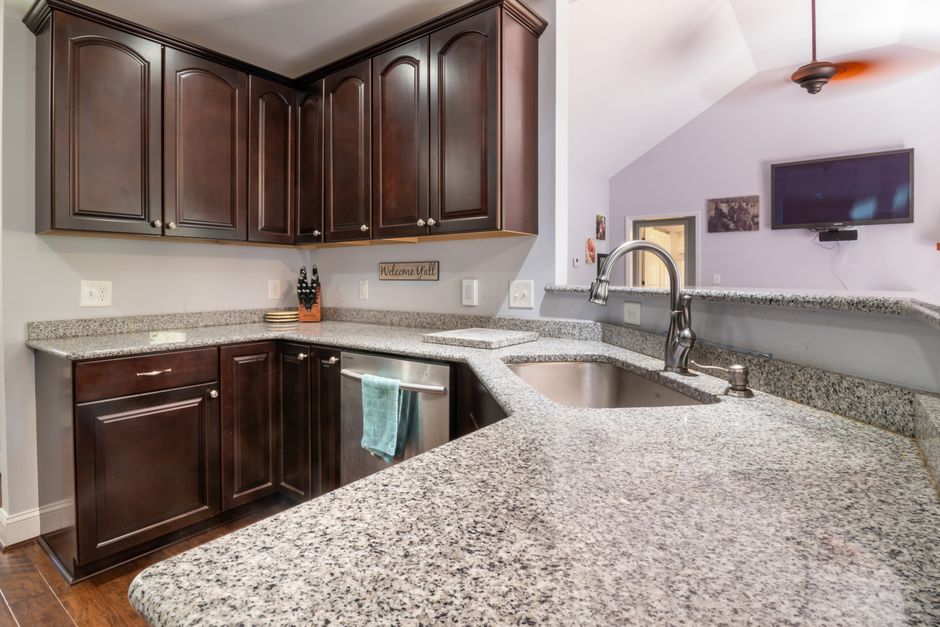
Yes, a chipped granite countertop can almost always be repaired, and many cracked ones can be too. The deciding factor is not how bad the damage looks. It is whether the stone is still supported evenly underneath, because granite only reflects what is happening beneath it.
Start With the Type of Damage
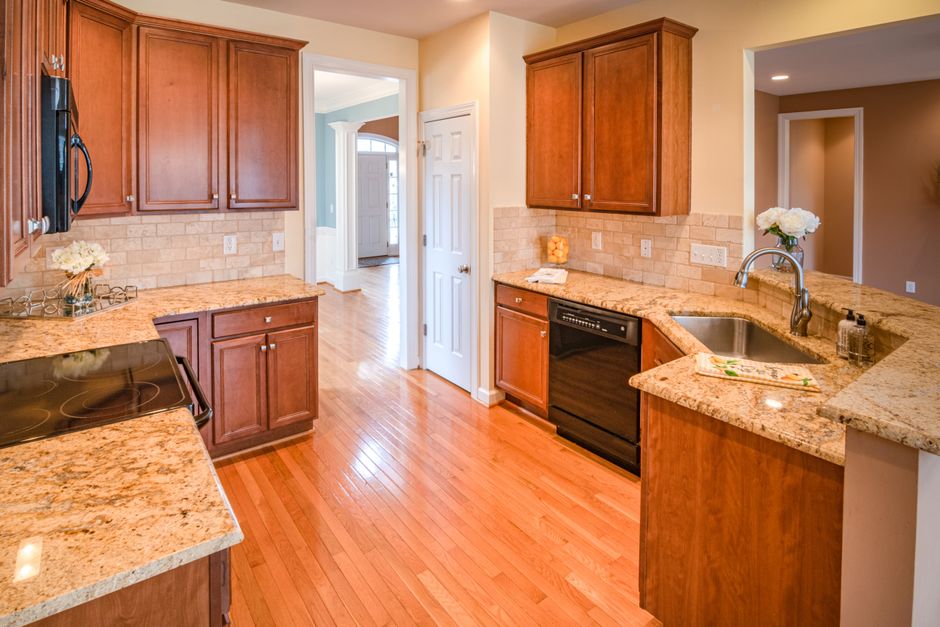
Three kinds of marks get confused, and each calls for a different response.
Chips
A chip is a small piece missing from an edge, a corner, or the rim of a sink cutout. Chips usually come from a heavy pot or a cast iron pan set down hard. The front edge, the sink corners, and the spot beside the dishwasher are the usual victims.
Fissures
A fissure is a natural seam in the stone that follows the crystal pattern. Run a fingernail across it. If the nail does not catch, it is almost certainly a fissure, and fissures normally need no repair. They are part of the stone, not damage.
Cracks
A crack tends to cut across the pattern of the stone, and it catches a fingernail. Cracks are the ones worth investigating, because they usually have a cause that the surface repair will not fix on its own.
How a Chip Gets Repaired
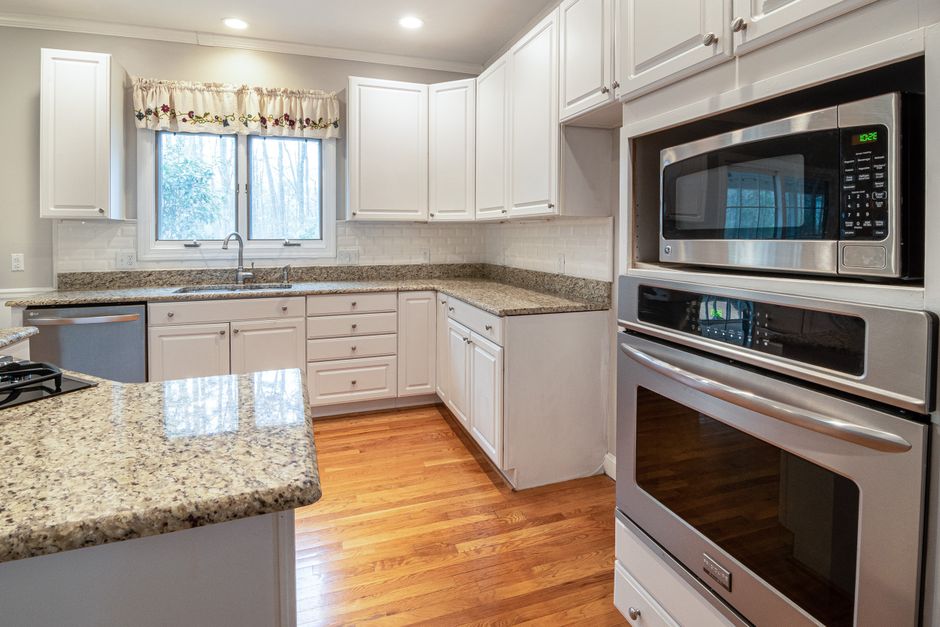
A small chip is usually filled with a tinted epoxy or acrylic resin. The resin is slightly overfilled and left to cure. Then it is shaved flush with a razor blade and polished back to the surrounding sheen.
If the piece that broke off is still around, put it in a bag and keep it. A clean fragment can often be bonded back into place, and that blends better than any filler because it is the original stone.
What to expect from the result
How well a repair hides depends on the granite. Busy, speckled patterns conceal a fill easily. Solid black, uniform white, and gray slabs with long veins show repairs more, and a spot that is slightly dull or slightly off in color is common. A professional repair can look excellent, but it will not always be invisible.
Using a home kit
A home kit is reasonable for a small, shallow chip. The mistake to avoid is sanding the spot with plain sandpaper and stopping there. Without a full polishing sequence afterward, the patch ends up dull and stands out more than the chip did.
Let the resin cure fully according to the product directions, which often means overnight. Wiping it with cleaner or using the area too early can leave a soft or cloudy fill.
How a Crack Gets Evaluated
Check for a height difference
Run your hand across the crack. If both sides sit at the same height, the crack is probably stable, and a thin, low viscosity resin can wick into the gap. That keeps dirt and moisture from collecting in it, although the line usually stays faintly visible.
If one side sits higher than the other, the stone is not being supported evenly. The cause is underneath: a sagging cabinet, a missing shim, or a failed support. That has to be corrected first, or the crack will reopen no matter how well it is filled.
Find out whether it is moving
Mark both ends of the crack with a small pencil tick and take a dated photo. Look again in a few weeks. A crack that grows points to a structural or support cause. A crack that stays put is usually a good candidate for a simple fill.
Know where cracks start
Cracks favor weak points. These include the narrow strips of stone in front of and behind a sink, the corners of sink and cooktop cutouts, and long runs between seams. Inside corners cut square instead of slightly rounded are especially prone, because stress concentrates there.
Look Under the Crack Before Paying for the Surface
Overhangs and bar tops
Island and bar overhangs crack when they lack support and someone sits, leans, or stands on the edge. If an overhang cracked near the cabinet line, brackets or corbels should go in before the crack is repaired.
Undermount sinks
An undermount sink hangs from the stone by clips, anchors, or adhesive. A sink full of water and heavy pots keeps a constant load on the cutout. If the sink has dropped or shifted, the mounting should be redone at the same time as the crack repair.
The dishwasher
A dishwasher should mount to the side cabinets, not be screwed up into the granite. Screws driven into the underside of the stone can split it. Whenever a chip or crack shows up directly above the dishwasher, check this first.
Slab thickness
Thinner 2 cm slabs crack more readily than 3 cm slabs, especially at overhangs and cutouts. They generally need a full plywood subtop or a laminated thicker edge. Knowing which thickness you have helps you decide whether a crack was a one time accident or a sign of a support problem.
Riverside Conditions That Matter
Riverside sits in an active earthquake region, and many homes have settled over decades. After a quake, or when doors begin sticking, check the counters for new cracks and check whether the cabinets have shifted.
In older neighborhoods, such as the historic streets near downtown and the Wood Streets, floors and walls are often out of level. A counter set on cabinets that were not shimmed properly rests on high spots and can crack over time. Checking level and support before paying for cosmetic work is money well spent.
The long, hot dry season adds a smaller factor. Afternoon sun through a west facing window can heat one part of a dark counter far more than the rest. That alone rarely cracks good stone, but it is a reason not to set a hot pan on a sunbaked section that already has a fissure. Granite handles normal cooking heat well, yet sudden concentrated heat can stress an existing fissure and can scorch or cloud the resin many slabs are treated with at the factory. Trivets under hot pans, slow cookers, and electric griddles are cheap insurance.
Seams That Have Opened or Chipped
A seam that has opened or chipped can usually be cleaned out, leveled, and refilled with color matched seam epoxy. Run your hand across it first. If one side is higher, the slabs need to be releveled before refilling, which brings the problem back to support underneath.
Before Assuming It Is Damage
Riverside tap water leaves heavy mineral deposits. White crust or dull rings around the faucet and soap dispenser are often mistaken for etching. Try a stone safe cleaner and a soft pad before deciding the stone needs repair.
Avoid vinegar, lemon based products, and other acidic or harsh cleaners, particularly on repairs and sealed surfaces. They can wear down sealer and dull resin fills. Some stones sold as granite also contain calcite, which acid will etch.
Resealing After the Repair
Once a repair has fully cured, reseal the area. Test it by leaving a few drops of water on the stone. If the spot darkens within several minutes, it is time to reseal. Base the interval on that test rather than a fixed calendar, and remember that a dry climate does not remove the need to seal. Sealer resists stains. It does not prevent chips or cracks.
When Replacement Is the Better Choice
Not every crack means a new countertop. Replacement usually makes sense when:
- A crack runs through the full thickness of the stone and keeps moving.
- Several cracks meet in one area.
- A large piece is missing.
Swapping out a single section is possible, but a new slab rarely matches the old one in color and pattern, so the new piece may stand out. Weigh that against a repair that, on a stable crack with good support, can be both durable and discreet.
The practical order is simple: identify the damage, check whether it is moving, fix whatever is wrong underneath, then repair the surface and reseal.